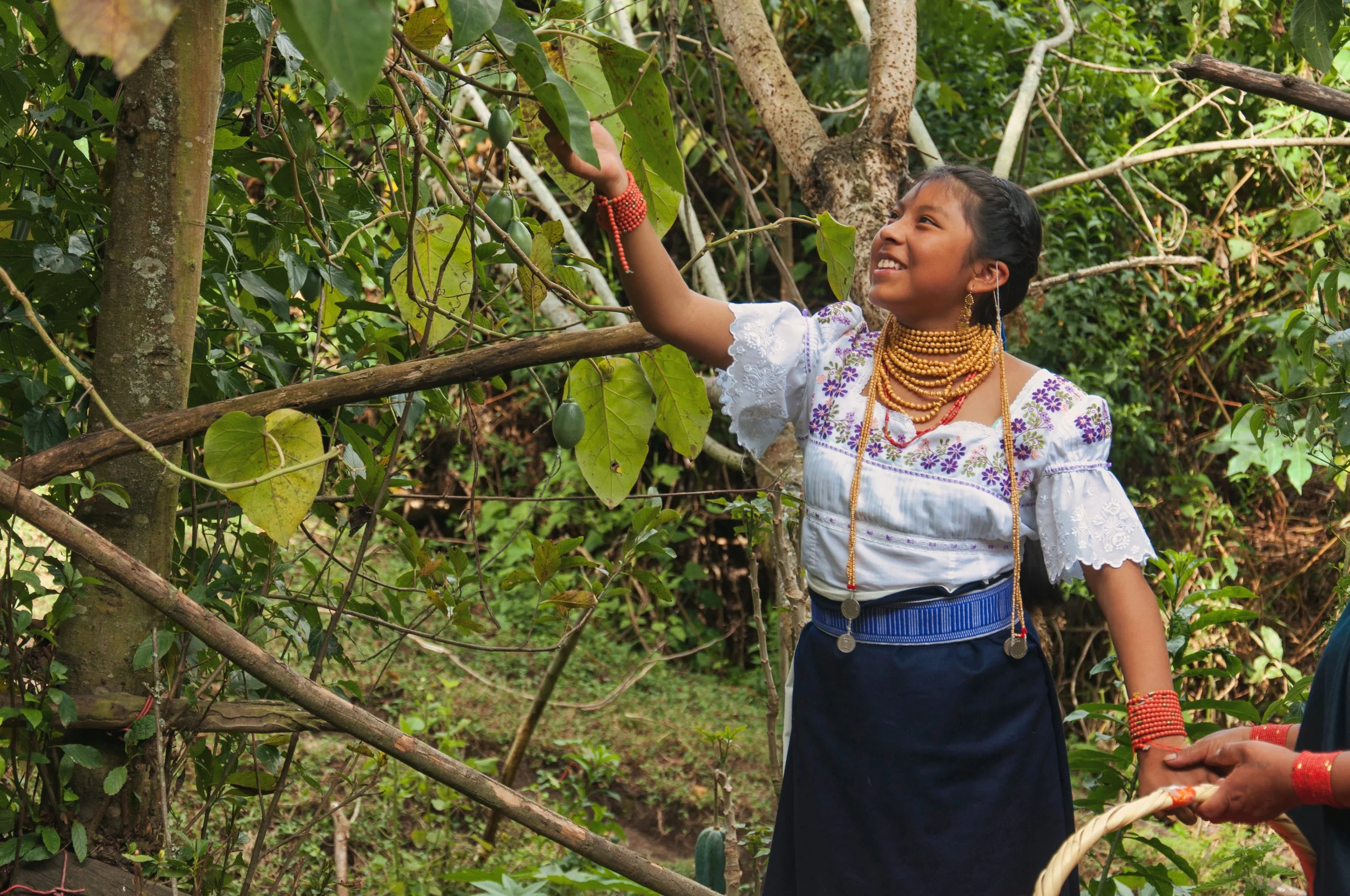
A Relational Worldview: The Ontology of Interconnectedness
The world's most sustainable cultures are based upon an ontology of relation, where identity itself is derived from the web of connections between the individual, the community, and the cosmos.
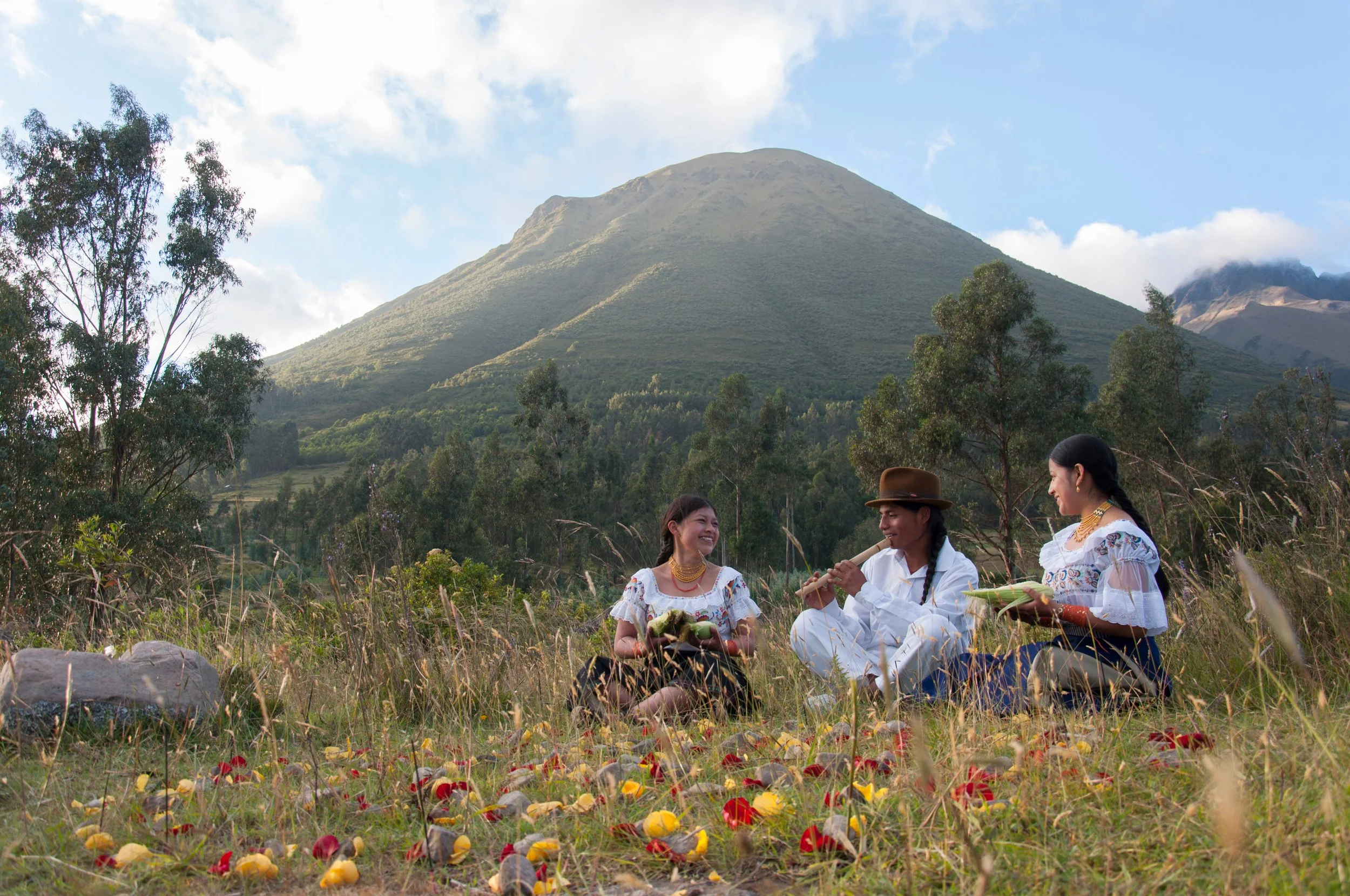
The proposition of a sustainable and harmonious global society is not a novel invention or an unattainable fantasy. It is, rather, the rediscovery of a recurring pattern of wisdom embedded within the social, economic, and spiritual frameworks of long-enduring human cultures.
These societies, from the dense forests of the Amazon to the vast plains of North America and the deserts of Australia, developed sophisticated systems of living that were predicated not on domination over nature, but on a deep, reciprocal relationship with it.
By examining the core principles that allowed these cultures to thrive in dynamic equilibrium with their ecosystems for millennia, we can distill a set of foundational tenets for a regenerative world order. These principles are not relics of a bygone era but timeless truths about the nature of life and the best conditions for our collective, sustainable betterment and flourishing.
The most profound distinction between many Indigenous and ancient worldviews and the dominant modern paradigm lies at the level of ontology — the fundamental understanding of being and existence.
The modern West has largely been built upon an ontology of separation, which asserts the individual as a discrete, autonomous agent in a world of other discrete objects and resources to be utilized. In stark contrast, many of the world's most sustainable cultures are based upon an ontology of relation, where identity itself is derived from the web of connections between the individual, the community, and the cosmos.
Grounded in the ethics of ancient wisdom & propelled by the process of "Doing Utopia," we can now construct the practical architecture for our shared future on this beautiful planet.
This relational worldview is perhaps most eloquently expressed in the Southern African philosophy of Ubuntu, encapsulated in the Nguni/Zulu saying, “Umuntu ngumuntu ngabantu” — translated "a person is a person through other persons," or simply “I am because we are.”
Ubuntu states that one's humanity is not an inherent, individual quality but is co-created and sustained through compassionate, reciprocal, and just relationships with others. This philosophy supports collectivism over individualism, emphasizing that the community's well-being is the prerequisite for individual fulfillment.
A parallel understanding is found in the Andean Indigenous concept of Buen Vivir, which translates to "good living" or "collectively living well." Buen Vivir is not about living better at the expense of others, but about achieving a harmonious equilibrium between humans, and between humanity and nature, or Pachamama, our Mother Earth.
From a pacha-centric worldview, humans are not separate from or superior to nature, but are an integral part of a living, interconnected cosmos. It sees no separation between human beings and nature; all are part of the pacha, an indissoluble unity of space and time. This worldview legally recognizes Nature as a subject with its own rights.
This deep sense of connection to the non-human world is also central to Aboriginal Australian spirituality, where the concept of "Country" refers not just to a geographical location but to a living entity with which one has a reciprocal, kinship-based relationship.
Similarly, the Fijian concept of Vanua signifies an inseparable union between the land and the people. The land is not merely turf for cultivation but symbolizes the culture, values, and social systems that give life meaning. To be separated from one's Vanua is to be cut off from one's very source of life. The philosophy dictates that we do not own the land; the land owns us.
Together, these relational worldviews offer a profound critique of the dominant global paradigm and provide a rich, time-tested foundation for building a more sustainable, just, and interconnected future. They remind us that our humanity is not a private possession but a quality we owe to each other and to the living world that sustains us all.
This ontological foundation — that we are fundamentally relational beings, deeply interwoven with each other and the living world — is the necessary starting point for any social or economic model that aims for genuine harmony and sustainability.
Sustainable Stewardship as Economic and Social Practice
When the world is perceived as a web of relations rather than a collection of resources, economic activity transforms from extraction to stewardship. The principles of sustainable resource management are not technical add-ons but direct expressions of a relational worldview.
Indigenous communities worldwide have demonstrated for generations how to live sustainably by caring for the Earth to ensure future generations can thrive. A core principle is the wise and thoughtful use of resources. This involves practices like sustainable harvesting, which allows nature to recover, and a deep, mindful awareness of one's own consumption patterns.
This contrasts sharply with modern extractive economic models that have historically been designed to extract maximum value from natural resources with little regard for long-term sustainability, an unfortunate legacy of colonial economic systems.
Indigenous farming, for instance, was based on an exhaustive, detailed knowledge of different soils, plants, landforms, water systems, and weather patterns, a practice of "natural gardening" that maintained the health of the entire ecosystem.
This stewardship extends to the active protection of biodiversity. Indigenous cultures recognize that a variety of plants and animals is essential for healthier, more resilient ecosystems.
This bio-cultural heritage is rooted in a sophisticated understanding of the ecological, dietary, and medicinal functions of all living beings — knowledge accumulated over millennia of observation and experimentation.
This deep ecological wisdom is transmitted and sustained through storytelling and tradition. Stories serve as powerful vehicles for sharing knowledge about sustainability, emphasizing respect for nature and teaching younger generations how to live in harmony with the Earth. This intergenerational transfer of knowledge ensures that the principles of stewardship are not lost but are continuously adapted and applied.
Governance for Posterity and the Common Good
The political structures of many ancient and Indigenous societies were designed to ensure long-term stability and the well-being of the collective, often embodying principles of deep democracy and foresight that stand in stark contrast to the short-term, reactive nature of many modern political systems.
The pinnacle of this long-term political thinking is found in the governance model of the Haudenosaunee (Iroquois) Confederacy. Founded in the 12th century, it is the world's oldest surviving participatory democracy.
Its constitution, the Great Law of Peace, is built upon the Seventh Generation Principle, which dictates that all major decisions must be made with consideration for their impact on the seventh generation into the future.
This principle institutionalizes long-term thinking and ecological responsibility at the highest level of governance. The Haudenosaunee model also emphasizes consensus-based decision-making, ensuring every voice is heard to prevent divisive outcomes.
This includes a sophisticated balance of power between the individual tribal nations and their representative Grand Council of Chiefs, and between male Chiefs and female Clan Mothers. In this matriarchal guided society, the Clan Mothers hold significant authority, including the power to appoint and remove Chiefs.
The Haudenosaunee model is built on a foundation of peace, unity, and collaboration, with several key mechanisms designed to ensure that the well-being of the community remains the highest priority.
Unlike governance models based on majority rule, which can create winners and losers, the Haudenosaunee system emphasizes consensus. The goal is to reach agreements where every voice is heard, and all parties are aligned. This process prevents divisive outcomes and ensures that every member feels valued, fostering a culture of mutual respect and strengthening long-term buy-in and unity.
The Great Law of Peace outlines a complex system of checks and balances that distributes power and ensures leadership remains accountable to the people. Each of the member nations maintains its own leadership for internal affairs, but they agree that common causes affecting the entire Confederacy are to be decided in the Grand Council of Chiefs. This structure, like a bicameral legislature, divides the Chiefs into two groups of "Elder Brothers" and "Younger Brothers" to facilitate deliberation and balance.
The Confederacy grants significant authority to Clan Mothers, the female leaders of the clans. They serve as the guardians of peace and community values and hold the ultimate responsibility for the people's welfare. Clan Mothers have the power to appoint Chiefs and, crucially, to remove them if they fail in their duties to the community. This provides a powerful check on the Chiefs' authority and ensures that leadership is always grounded in service and accountability.
Within the Haudenosaunee worldview, honor is not earned by material gain but by service to others. This principle is a direct counterpoint to economic models that prioritize individual wealth accumulation. This focus on service ensures that leaders are motivated by the well-being of the community rather than personal ambition or profit.
In another showing of great wisdom, the Iroquois value harmony and developed formal practices to maintain it. Condolence ceremonies are used to address grievances and resolve conflicts by formally acknowledging and healing disagreements. This prevents festering issues that could threaten the peace and unity of the community.
In essence, the Iroquois Confederacy's governance model is a holistic system where every element — from its long-term vision to its daily decision-making and leadership structure — is intentionally designed to serve the collective good. It’s a timeless framework built on the principles of peace, inclusivity, and collaboration that prioritizes the health and sustainability of the community for generations to come.
The Iroquois Confederacy's governance model significantly influenced the framers of the United States Constitution, particularly Benjamin Franklin and John Adams, who deeply admired the Iroquois' political system and drew inspiration from its principles of unity, federalism, and balance of power. It provided a powerful, real-world example of how separate nations could unite for the common good while preserving individual sovereignty — a problem the thirteen original colonies of the United States were struggling to solve.
Economic Systems of Community and Reciprocity
In a world defined by relationships, economic exchange becomes a primary vehicle for creating and strengthening social bonds. Many Indigenous economic systems operate on principles of reciprocity and balance, challenging the competitive, individualistic nature of modern capitalism.
The focus on the collective good is a recurring theme. In traditional African societies, for example, the economic sphere is not separate from family ties and structures of authority. An individual's economic activities are subordinate to their social relations, aimed at safeguarding the community's harmony and continued existence.
Work is often organized on a collective basis, serving a purely functional significance to strengthen the cohesion of the community rather than to promote individual achievement, which could be seen as a threat to group harmony.
Another powerful example is the Potlatch ceremony of the Indigenous peoples of the Pacific Northwest Coast of Canada and the United States. The Potlatch is a complex gift-giving ceremony that serves as the primary governmental, legislative, and economic system. Social status is established not by who accumulates the most wealth, but by who gives the most away.
This ceremonial exchange of goods and services establishes and reinforces social status, reaffirms kinship and international connections, and functions as a system of law that governs resource rights through reciprocity. The Potlatch demonstrates an economy where generosity, not accumulation, is the marker of power and prestige, and where the distribution of wealth serves to bind the community together.
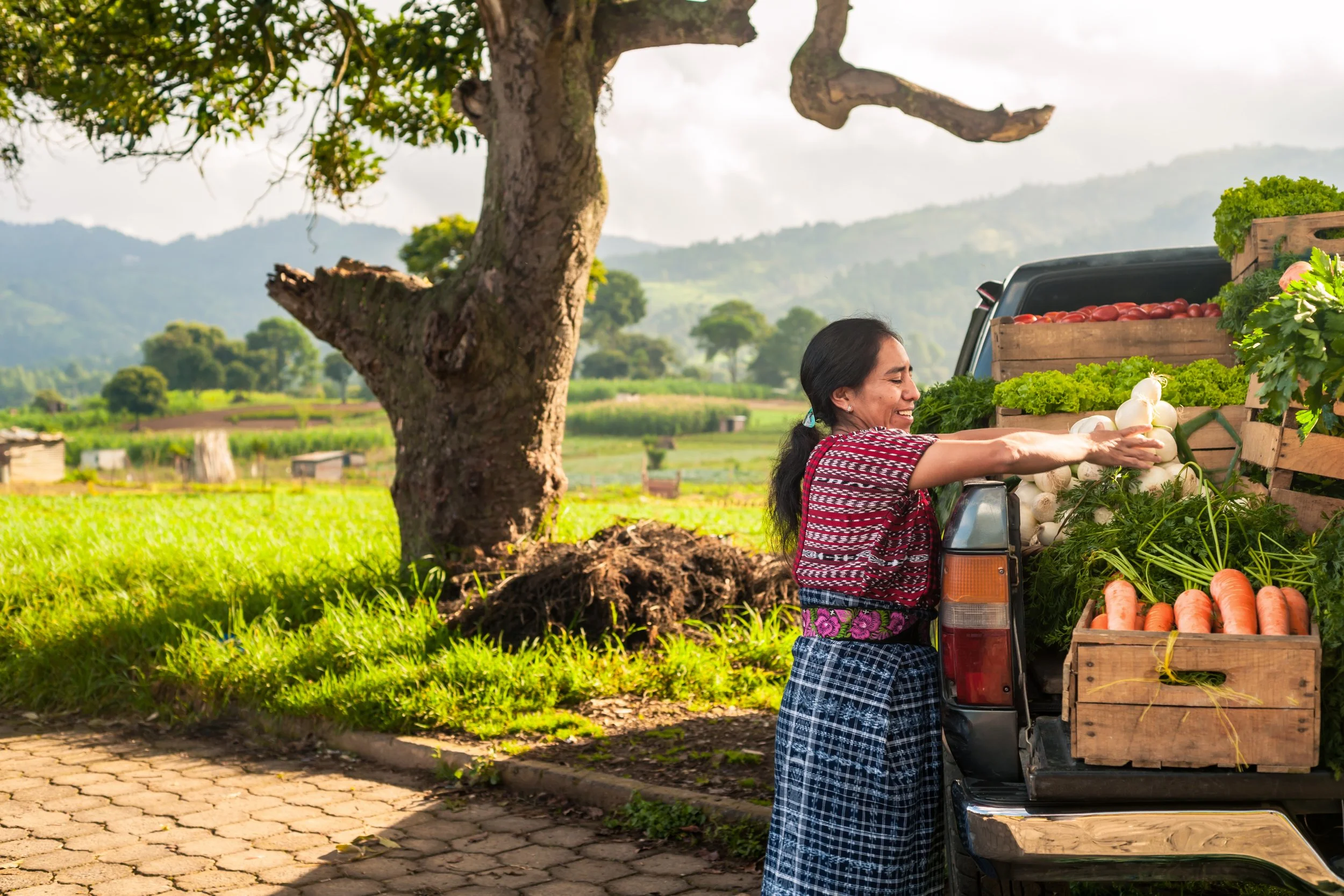
This principle is part of a broader category of Gift Economies, systems of exchange where valuables are given without an explicit agreement for immediate or future reward. Governed by social norms, these economies foster community, whereas market-based exchanges can sometimes harm community relationships. In such systems, reciprocity is often generalized, with goods and services exchanged without keeping exact track of their value, based on the long-term expectation that value will balance out over time within the community.
This contrasts with the highly centralized, state-controlled redistributive economies of civilizations like ancient Egypt — where the pharaoh, as a self-proclaimed divine ruler, controlled agriculture, trade, and taxation to support the state apparatus — and the more complex market-based systems of the Maya, who developed extensive trade networks for both subsistence and prestige goods, with merchant groups playing a key role in economic growth.
While these ancient systems varied greatly, from the egalitarian structures of the Indus Valley to the hierarchical societies of Mesopotamia, the most enduring models offer a consistent set of core principles: a relational worldview, a commitment to intergenerational stewardship, governance for the common good, and economies designed to foster community. These remain the foundational pillars upon which a viable global utopia can be built.
A fundamental error in how societies perceive their own existence is at the heart of our contemporary polycrisis. Modern systems are largely built on an ontology of separation — manifested as individualism, the commodification of nature, and the emphasis on private property — which inevitably leads to the exploitation of both people and the planet as costs are externalized in the pursuit of profit.
The ancient and Indigenous systems detailed here are built on an ontology of relation, where harming another or the environment is tantamount to harming a part of oneself. This is not merely a philosophical distinction; it’s the core determinant of a system's long-term viability.
Any successful global model must therefore begin not with incremental policy changes, but with a profound and intentional shift toward this relational worldview, making a relational worldview the central organizing principle of any new economic, political, or social movements.